
Neuron for UX Designers
Shorten onboarding time by turning new information into retained context. A second brain for user research findings, interaction patterns, and design rationale so ux designers can ramp faster in new environments with less repetitive relearning.
The Problem
Where UX Designers lose momentum
Neuron pages for ux designers are written around real memory pressure, not generic productivity advice.
Research findings are rich but hard to connect to final interaction decisions later.
Design rationale disappears across iterations when notes and artifacts drift apart.
You need quick recall of evidence to defend design choices with confidence. Onboarding slows down when critical context is scattered across too many tools.
The Solution
How Neuron helps ux designers convert onboarding inputs into durable working knowledge
Capture Connect Recall Retrieve
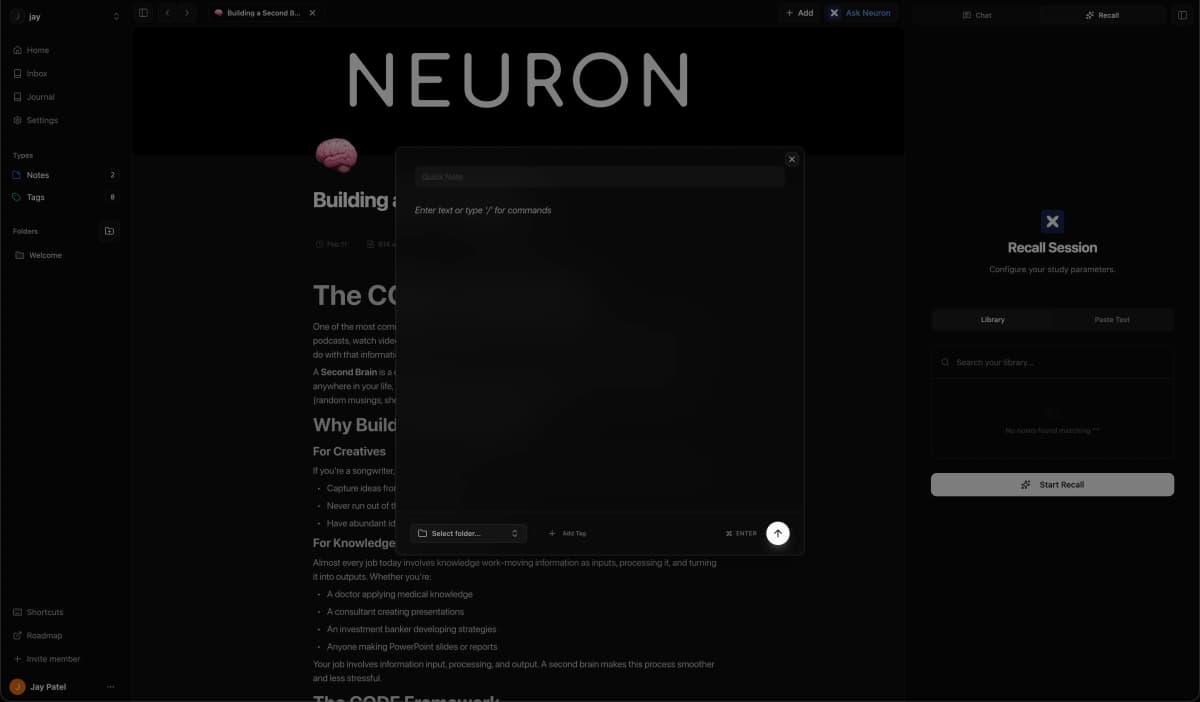
Dump your brain. Instantly.
Capture research notes, critique logs, and prototype learnings in seconds so new context is stored once and reused across the entire ramp period.
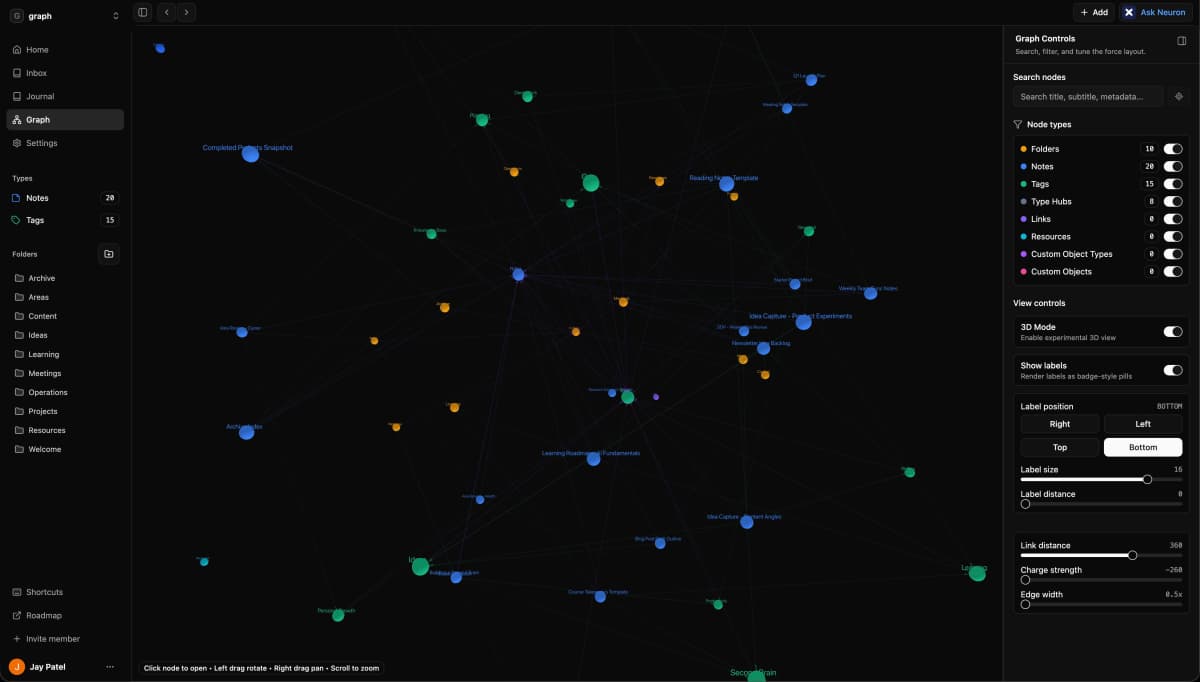
Your ideas, connected.
Map relationships across user research findings, interaction patterns, and design rationale so relationships between systems, people, and decisions become immediately clear.
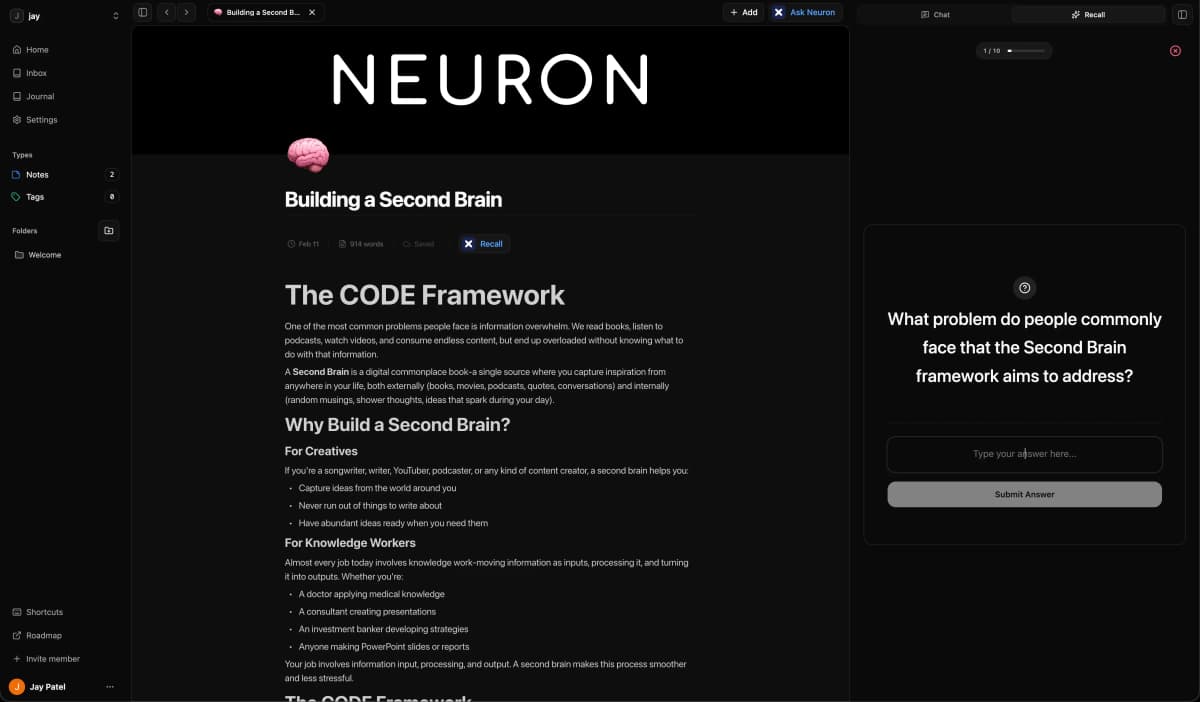
Neuron asks the right questions.
Generate active recall prompts like "Which observed behavior most strongly supports this interaction change?" to reinforce what matters most during your first high-velocity weeks.
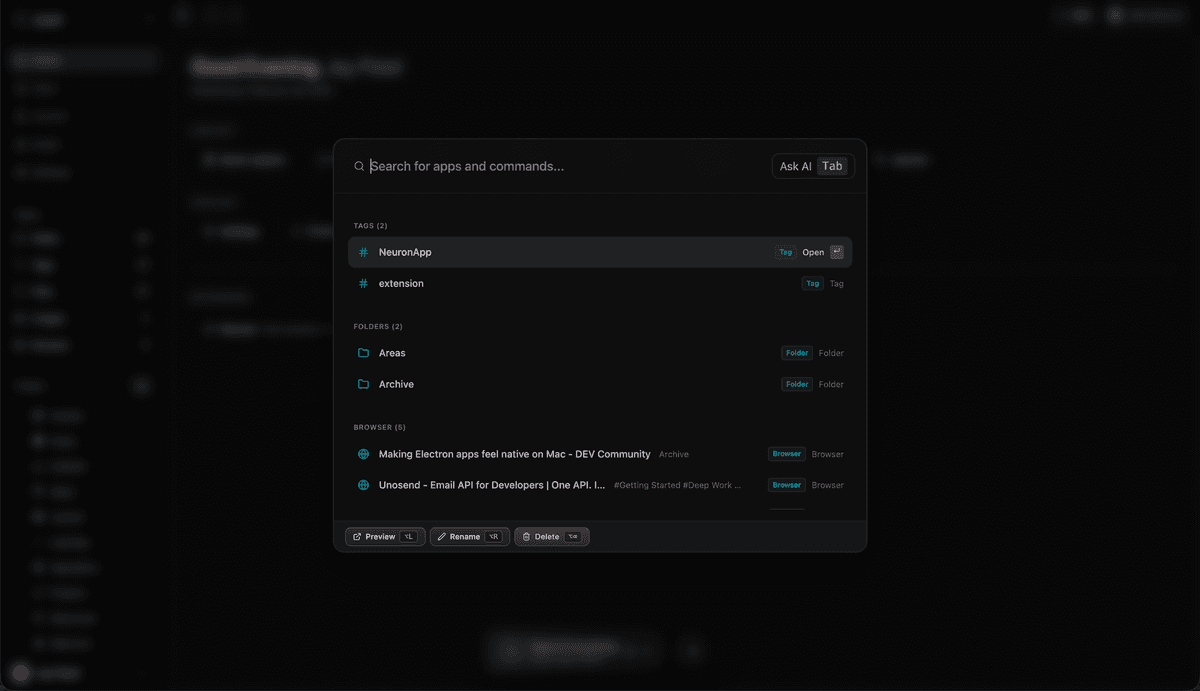
Find it when you need it.
Retrieve the right context before design reviews and cross-functional planning sessions when you need immediate context in fast-moving onboarding conversations.
- Which observed behavior most strongly supports this interaction change? This reinforces understanding before pressure builds.
- What usability risk remains unresolved in this prototype direction? This reveals blind spots before they become costly mistakes.
- What do I need to revisit before design reviews and cross-functional planning sessions so I can contribute earlier without context thrash?
Pricing
Transparent plans that scale with your memory
We like keeping things simple. One plan one price.
For power users.
- Unlimited object types
- Unlimited team members
- Active recall
- AI Assistant
- Chrome web clipper
- Raycast Extension
- Chat with your entire knowledge base
- 50 GB Storage
Buy once. Use forever.
- Unlimited object types
- Unlimited team members
- Active recall
- AI Assistant
- Chrome web clipper
- Raycast Extension
- Chat with your entire knowledge base
- 50 GB Storage
- Countdown to lifetime access
- Support an indie hacker
- Help build Neuron
FAQ
Questions from UX Designers
Answers are tailored to this role so the page stays relevant and conversion-focused.
Latest articles
Insights, updates and stories from our team.

Why It Converts
Why Neuron works especially well for UX Designers
It keeps research notes, critique logs, and prototype learnings in one place so retrieval is dependable instead of scattered.
It reframes user research findings, interaction patterns, and design rationale into prompts that match the way ux designers actually think and execute.
It strengthens recall before design reviews and cross-functional planning sessions, where context quality directly affects outcomes.
It transforms onboarding from passive intake into an active memory loop that speeds execution.
Build your second brain for UX Designers
Stop losing hard-earned context. Capture it once, retrieve it on demand, and improve recall every week.