
Neuron for Computer Science Students
Replace panic review with structured, consistent recall. A second brain for algorithms, systems concepts, and debugging patterns so computer science students can review consistently without relying on late-night cramming cycles.
The Problem
Where Computer Science Students lose momentum
Neuron pages for computer science students are written around real memory pressure, not generic productivity advice.
You learn abstractions quickly, but implementation detail memory decays without structured retrieval loops.
Project notes and theory notes live in separate places, creating friction when you need connected reasoning.
You must explain tradeoffs clearly during interviews and demos, but contextual recall is not always immediate. Cram-heavy review patterns burn energy and leave retention fragile after deadlines.
The Solution
How Neuron helps computer science students build steady review habits that actually stick
Capture Connect Recall Retrieve
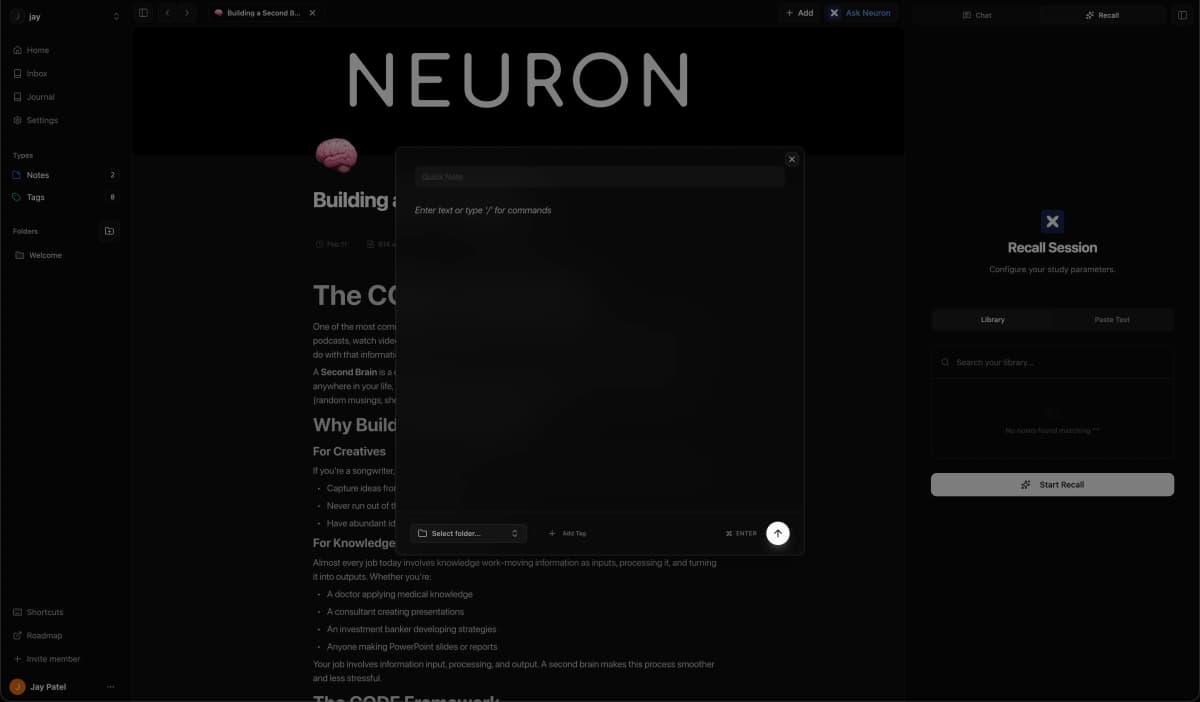
Dump your brain. Instantly.
Capture lecture notes, code snippets, and architecture diagrams in seconds so review sessions start with clean, structured source material.
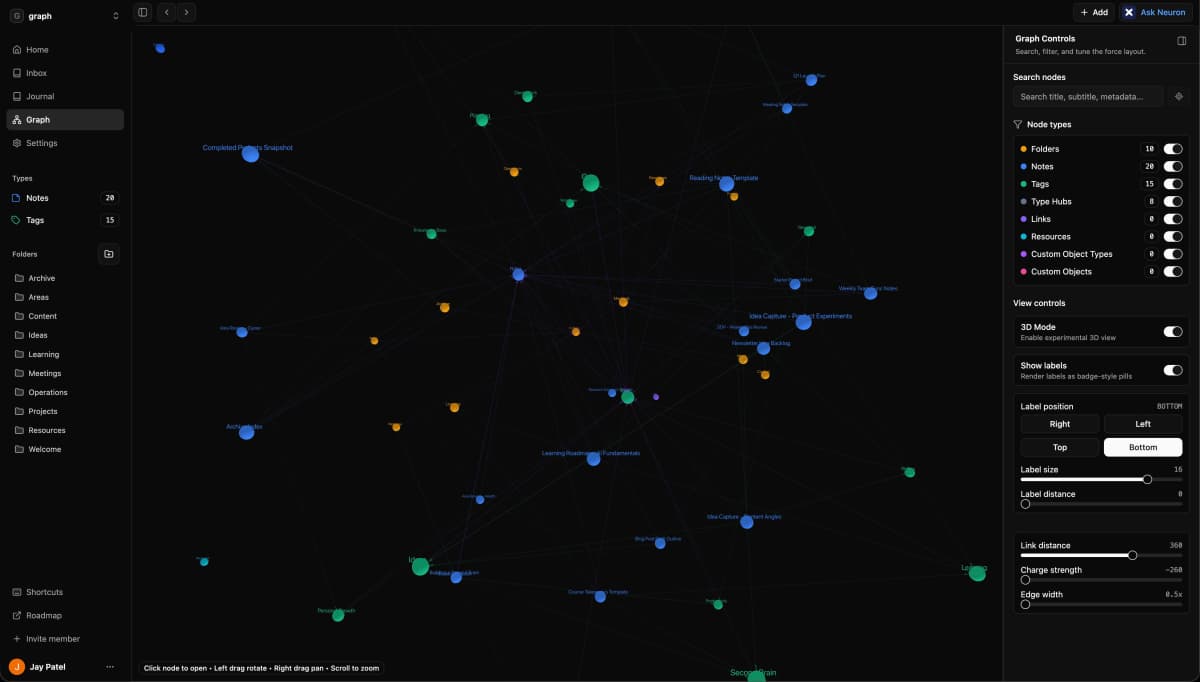
Your ideas, connected.
Map relationships across algorithms, systems concepts, and debugging patterns so revision focuses on weak links instead of random repetition.
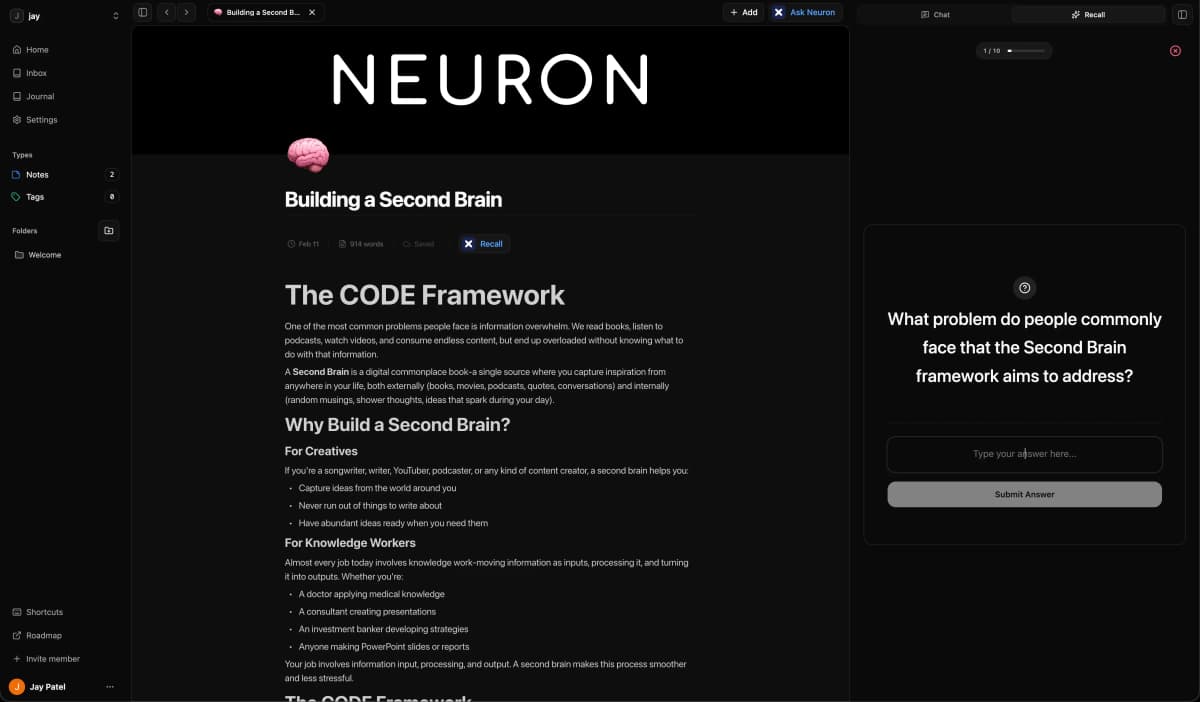
Neuron asks the right questions.
Generate active recall prompts like "Why is this data structure better than alternatives for the stated constraints?" to create efficient review loops that fit real schedules.
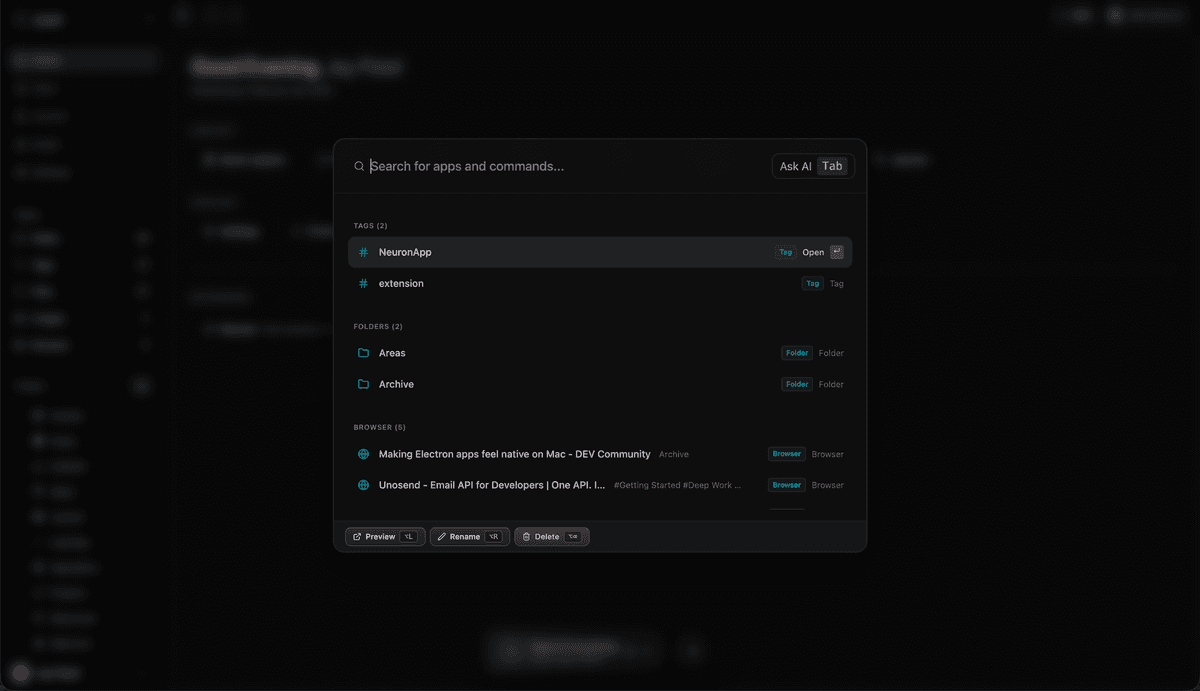
Find it when you need it.
Retrieve the right context before coding interviews, labs, and technical presentations when deadlines compress and attention is limited.
- Why is this data structure better than alternatives for the stated constraints? This reinforces understanding before pressure builds.
- Which failure mode appears first when this distributed assumption breaks? This reveals blind spots before they become costly mistakes.
- What do I need to revisit before coding interviews, labs, and technical presentations so I can maintain momentum through demanding timelines?
Pricing
Transparent plans that scale with your memory
We like keeping things simple. One plan one price.
For power users.
- Unlimited object types
- Unlimited team members
- Active recall
- AI Assistant
- Chrome web clipper
- Raycast Extension
- Chat with your entire knowledge base
- 50 GB Storage
Buy once. Use forever.
- Unlimited object types
- Unlimited team members
- Active recall
- AI Assistant
- Chrome web clipper
- Raycast Extension
- Chat with your entire knowledge base
- 50 GB Storage
- Countdown to lifetime access
- Support an indie hacker
- Help build Neuron
FAQ
Questions from Computer Science Students
Answers are tailored to this role so the page stays relevant and conversion-focused.
Latest articles
Insights, updates and stories from our team.

Why It Converts
Why Neuron works especially well for Computer Science Students
It keeps lecture notes, code snippets, and architecture diagrams in one place so retrieval is dependable instead of scattered.
It reframes algorithms, systems concepts, and debugging patterns into prompts that match the way computer science students actually think and execute.
It strengthens recall before coding interviews, labs, and technical presentations, where context quality directly affects outcomes.
It replaces reactive revision with a calm system that keeps retention stable over time.
Build your second brain for Computer Science Students
Stop losing hard-earned context. Capture it once, retrieve it on demand, and improve recall every week.